Brain surgery, science and education


As a pediatric neurosurgeon, neuroscientist, and educator, I come across many interesting bits of information and wonderful people. I will try to share some of this with you here. While the site draws heavily from my experiences as the Campagna Chair of Pediatric Neurosurgery at Oregon Health & Science University, and head of neurosurgery at Doernbecher Children's Hospital, this is a personal blog. My thanks to my wonderful OHSU colleagues, who share this exciting and rewarding work with me.


Showing posts with label neurosurgery. Show all posts

Monday, July 30, 2012

The Best and Brightest Come to Doernbecher


Doernbecher is not the country’s largest children’s hospital, but I think it is one of the best. The reason? Great people.

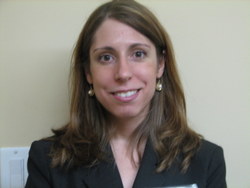
That is why I was so proud to be joined by one of the top young pediatric neurosurgeons in the country, who began her practice at Doernbecher Children’s Hospital today.

Dr. Lissa Baird graduated from Brigham Young and earned her MD degree from Columbia University College of Physicians and Surgeons. She underwent residency training at the University of California, San Diego, during which time she also completed an infolded fellowship in skull base neurosurgery at Louisiana State University, Shreveport (where I originally met her while a visiting professor there). She just finished as the 2011-12 Shillito Fellow in pediatric neurosurgery at Boston Children's Hospital. 

Dr. Baird has clinical and scientific interests in pediatric brain tumors and in new approaches using an endoscope to remove some tumors through the nose.

It would be an understatement to say that pediatric neurosurgeons are in demand around the United States. Dr. Baird was a top faculty candidate this year. I am proud that the opportunities, collegiality, and clinical and scientific talents evident across the institution attracted her to join the faculty at Oregon Health & Science University.

I think she will be a terrific addition to the program and will advance the goals and values we have been working on, most particularly technically excellent and compassionate care of Oregon’s children, and those of the region and nation.

Dr. Lissa Baird


Friday, July 6, 2012

Making Safety and Education Go Together


I graduated from medical school in the early 1990’s, and went to work in a major US hospital to train as a neurological surgeon. Like my compatriots around the country, within a few weeks of starting training, I began to perform invasive procedures needed by patients in the hospital. The first spinal tap I performed was on an actual patient. The first time I drilled a hole in the skull to relieve pressure … also an actual patient. Passing a catheter deep inside the brain to drain excess fluid? A patient.

Everyone doctor will have to get past his or her first of any procedure they need to perform in practice. And we need to train the next generation of doctors. So how can we do it, without sacrificing patient safety and the highest quality of care?

As the director of residency training in neurosurgery at OHSU, I have thought about this problem a lot. Having residents in the hospital 24 hours a day, seconds away from a patient’s bedside in the intensive care unit, has saved countless lives. But the emergency bedside procedures we do are some of the most impactful and risky in medicine.

In 2009, my colleagues and I hosted a ‘Boot Camp’ for 19 brand new neurosurgical trainees, only a few weeks out from medical school graduation. They came from 5 residency programs in the Pacific NW and California. We used a skills lab to teach, so the first skull drilling, the first lumbar puncture, the first fluid drain, were all carefully taught and mastered in a safe, simulated environment. While we had them all together, we also taught the residents about our perspectives on professionalism, careers, and respectful, effective communications with patients.

Three years later, the descendants of that first effort, the Society of Neurological Surgeons PGY1 Boot Camp Courses, are a universal part of residency training at all 100 neurosurgery training programs in the United States. They are endorsed by the American Council for Graduate Medical Education (ACGME), and they have been funded for 5 years by an unprecedented $1.9 million grant. Six courses are held each July, during the first few days of practice by new residents, at 6 centers around the country. OHSU continues to host the western region course and stay involved in curricular leadership of the courses nationally.

Today, OHSU for the 4th year hosted the Western Region PGY1 Bootcamp. What a great event!

OHSU is proud to share advances in safety and education with our colleagues around the US. Read more about the results at:


Dr. Nate Selden with SNS PGY1 Boot Camp residents


Saturday, June 30, 2012

Campagna Chair of Pediatric Neurosurgery


Mario and Edie Campagna are a precious commodity in our state. Committed Oregonians, they have worked hard their entire lives to build a wonderful state and then continued watching out for Oregon through wise and active philanthropy.

Mario Campagna was educated at the (then) University of Oregon Medical School here on Marquam Hill. Successful in school, he was called to the Mayo Clinic to train in neurological surgery, a new but cutting edge specialty requiring the greatest dedication and skill. Mario and Edie were so attached to their home state, though, that they returned to Oregon. After initiating his career here in Portland, Mario and Edie made a dramatic choice that would transform neurological care in Southern Oregon and help build the Medford community. Mario opened the first major neurosurgical practice between Portland and San Francisco.

For decades, Mario and Edie were respected leaders of the Medford community and medical world. Mario built a neurosurgical and neurological practice that was the mainstay of a huge region of Southern Oregon and Northern California. One of his four children also attended OHSU, and went on to train in Pediatrics at Doernbecher Children’s Hospital and to serve Oregon as a pediatrician. Mario and Edie became philanthropic leaders in Southern Oregon.

Imagine the pride I have had, then, since 2005, serving as the Mario and Edie Campagna Professor of Pediatric Neurosurgery, the only endowed position for a pediatric neurosurgeon in the state. During this time, Mario and Edie’s personal mentorship, advice, and guidance have been a wonderful part of my career and the growth of our program.  Thus, June 29th, 2012 is a special day that will always have special meaning for neurosurgery at Doernbecher. I flew with Dr. Stacy Nicholson, Credit Unions for Kids Professor and Physician in Chief of Doernbecher to Medford to celebrate the launch of the Campagna Chair of Pediatric Neurosurgery with Mario, Edie and other friends and family. Mario and Edie’s generosity means that pediatric neurosurgery will now receive tremendous additional support and will be able to attract a national program leader, in perpetuity. The Campagna Chair is the first endowed chair in neurological surgery in the state (and the 2nd endowed position overall).

The Chair celebration was, most of all, a wonderful opportunity to visit with two individuals who are not just wise philanthropists that have devoted their careers and lives to Oregon and raised their families here. It was also a chance to spend time with now dear friends, who have a deep and tremendous sense of the value of Oregon and of Oregonians, and a clear vision of why we should all work to better their interests now and in the future.

Nathan R. Selden
Mario and Edie Campagna Chair of Pediatric Neurosurgery
Oregon Health & Science University


OHSU Neurosurgery Residency 2012 Match


It is a true pleasure to announce the very strong results of the OHSU 2012 Neurosurgery Residency Program Match. For the first year ever, OHSU entered the match with three residency slots, and filled all three positions with top applicants.

Dr. Kunal Gupta, MB, ChB, holds both the British equivalent of an MD (the bachelor of medicine and surgery, ‘chirurgiae’) and a PhD from the University of Cambridge, England. During his research training, Dr. Gupta did basic work on oxidative stress in astrocytes, as well as extensively studying risk factors in British society for the occurrence of brain tumors. A tennis player and skier, Dr. Gupta is also a competitive ballroom dancer.


Dr. Katie Krause, MD, PhD, undertook both her medical and scientific training at the Medical College of Wisconsin, Milwaukee. Dr. Krause’s thesis work and extensive publications investigated the respiratory control function of the brainstem Kolliker-Fuse nucleus. She is a pianist, experienced piano teacher, and an outdoor enthusiast.


Dr. Tristan Stani, MD, studied Philosophy, Classics and the History of Science at St John’s College before matriculating at the Warren Alpert School of Medicine at Brown University. He returns to OHSU for residency training after spending the summer here as the 2009 Mario and Edith Campagna Scholar. His research work has concentrated on mitochondrial diseases and, at OHSU, on the effects of deep brain stimulation for tremor on precision grip. Dr. Stani is also an outdoor enthusiast.


The Residency Program in Neurosurgery is proud of the outstanding quality of trainees who come to OHSU from around the country, and the world. The Program trains a group with exceptional creative and scientific accomplishments, of diverse background, and including one of the highest proportions of women in any U.S. training program.

Nathan R. Selden, MD, PhD
Campagna Chair
Residency Program Director

Announcing the 2012 Campagna Scholar in Neurological Surgery!


Dr. Mario and Mrs. Edith Campagna are long time members of the Oregon community. Mario pioneered neurosurgical care in southern Oregon, and Edie supported his incredibly busy practice and raised their family here in the state.

The Campagnas have also been visionary philanthropists, and maintain close ties with neurosurgery and neurosurgical education at OHSU.

One of the most innovative programs the Campagnas have initiated is the Campagna Scholarship in Neurological Surgery. After a raft of applications from medical schools around the country and consideration by a committee within the Department of Neurological Surgery at OHSU, we have named the 2012 Campagna Scholar, the 5th Scholar to matriculate into the program.

Gustavo Mendez is a medical student at OHSU, the first internal candidate selected in the national Campagna Scholars annual competition. With a BA in physics from Harvard University and post-BA pre-med studies at USC, plus extensive lab experience, Gustavo is a start student. He has already greatly impressed the faculty at OHSU, and has begun a project under the supervision of Neurosurgery Asst. Professor, Dr. Brian Ragel.

Previous scholars have conducted research leading to numerous publications in the peer reviewed neurosurgical literature. Already, two have fulfilled Dr. Campagnas vision to encourage the best and brightest to enter neurosurgical training: they have earned coveted spots in neurosurgical training residencies after medical school.

Many have also presented their work at national neurosurgical meetings. Here are two scholars, just after their presentations at the Congress of Neurological Surgeons meeting in Washington, D.C., in October of 2011: The 2010 Scholar, Susan Wozniak, and the 2011 Scholar, Michael Strong. Also pictured are OHSU Neurosurgery Resident, Dr. Eric Thompson, and myself (the Campagna Professor of Pediatric Neurosurgery – but I’ll leave that story to another entry!).

It is my privilege each summer to visit Medford for the day with the current scholar. Here is a photo of Susan Wozniak and myself with the Campagnas. I am greatly looking forward to the next trip with Scholar Gustavo Mendez this summer!

Nate Selden, Edith Campagna, Mario Campagna, Campagna Scholar Susan Wozniak

Campagna Scholar Michael Strong, OHSU Resident Eric Thompson, Nate Selden, Campagna Scholar Susan Wozniak

National Accreditation Renewal, New Positions, and Special Recognition for OHSU Neurosurgery Residency


Oregon Health & Science University is one of only 100 medical centers in the nation to train the next generation of neurosurgeons, as part of our mission to advance cures for neurological disease.

In order to maintain the highest standards of education and patient safety, the American Council of Graduate Medical Education (ACGME) performs a thorough records review and site visit of every residency program every 5 years. Our program spent months preparing documents and then underwent our site visit in June, 2011.

The results were better than we hoped for. In addition to a clean bill of health and full 5-year accreditation period, our residency complement was increased from 14 to 18 trainees. The review committee recognized the strong training environment, nationally recognized faculty, and tremendous opportunities to learn in a safe and supportive environment for patients and trainees in making these decisions.

To top it off, the OHSU Program was also commended for overall quality, and became the first neurosurgery residency program in the country invited to share a ‘notable educational practice’ with other programs nationally. The practice cited is a new call schedule arrangement that shortens the length of duty shifts for the doctors working through the night in the OHSU Neurosciences ICU, taking care of the sickest patients. The schedule makes sure a well rested and focused doctor is only seconds to minutes away from the bedside of critically ill patients. It also provides for optimal care ‘handoffs’, so that shorter shifts do not result in confusion about patient status or recent events.

The new schedule was developed by a group of educators and trainees in our Program, who could see all angles of each challenge and potential solution. Kudos to key players, Dr. Brian Ragel, Assistant Professor of Neurological Surgery, and Dr. Mark Piedra, Senior Neurosurgical Resident!

OHSU’s innovative schedule will soon be reported in the medical literature, and has been posted at the ACGME’s education innovations website.


New Technology to Treat Parkinson’s Disease and Tremor with More Comfortable Asleep Surgery


For patients who do not respond well to medication, surgery for Parkinson’s disease and severe tremor has been a mainstay since the 1950s. In fact, Dr. Kim Burchiel, the John Raaf Professor and Chair of Neurological Surgery, performed the first operations in Oregon using the most modern technique, implantation of deep brain stimulation electrodes. Dr. Burchiel has also been a pioneer in improved techniques and outcomes for brain stimulation operations.

Dr. Burchiel
One of the biggest barriers for patients to undergo deep brain stimulation surgery has been anxiety and discomfort. Typically, patients must be awake for the surgery, which uses a large metal frame clamped to the skull to direct the electrode. The only way to be sure the electrode was in the right spot was to turn it on and measure the effects in the patient … while they were awake!

Now, however, Dr. Burchiel has pioneered a new technique here at OHSU. He uses special intra-operative CT imaging to guide the electrodes to the exact spot deep in the brain needed, while the patient rests comfortably under a general anesthetic. Especially for some older and more fragile patients with Parkinson’s disease, this new technique is a real blessing, and may open up access to surgery for some patients who could not consider it before.

See how the new surgery works:


The Changing Face of Neurosurgery: OHSU Helps Lead the Way


Neurosurgery as a specialty was founded in 1920, when our George Washington, Dr. Harvey Cushing, founded the Society of Neurological Surgeons and began to share techniques with an elite group of burgeoning brain surgeons around the United States. Central to the new specialty was training, and our passage of knowledge from generation to generation has shaped us ever since.

Until very recently, the faces in neurosurgery residency training programs were mostly pretty similar, and virtually all male. When I trained, about 5% of incoming residents were women. Just 4 or 5 years ago, that percentage had only reached about 10%. In just the last few years, though, more women are entering neurosurgery and beginning to change the specialty. In the last two years, about 1 in 5 new trainees has been a woman.

I am proud that OHSU Neurosurgery is in the vanguard of this new trend. Currently, 5 of our 15 residents are women, an unusually high 33%. Our 2011 class of new residents included Dr. Frances Hardaway and Dr. Kelley Bridges, both of whom were among the top U.S. medical school graduates in 2011.

Our experience has been that a reputation for a supportive and positive environment for women trainees (and in fact all trainees) has given us access to some of the best applicants available. Soon, having a neurosurgical workforce that reflects the diversity of the neurosurgical patient population will start having a positive, and profound, impact.


Minimally Invasive Brain Tumor Surgery at Doernbecher


Doernbecher has a distinguished record for removing some of the most difficult tumors faced by pediatric neurosurgeons.

One of the toughest, a rare tumor called craniopharyngioma, is tucked deep in the center of the head, between the carotid arteries emerging from the skull base, the vision nerves, the most sensitive areas of the base of the brain, and the brainstem (see an example, below). Our novel report of using a newer skull base surgical approach in children to remove craniopharyngiomas, while preserving visual function at record high rates, was highlighted on the cover of the leading Journal of Neurosurgery: Pediatrics, in 2009.

Modified orbitozygomatic craniotomy for craniopharyngioma resection in children

Now, for some smaller craniopharyngiomas, an even newer, more innovative approach is available at Doernbecher: using an endoscope to enter the skull base through the nose and remove the tumor minimally invasively, and completely. Remarkably, this trans-nasal surgery leaves no scar at all.

Some larger tumors are still removed using the open skull base approach Doernbecher helped develop in children. Along with our superb brain tumor program colleagues, these innovations offer the best odds for children with one of the most difficult to treat pediatric brain tumors.


Patients Giving Back


Every day I come to work I am amazed at the privilege of caring for babies and little children. It is the most rewarding aspect of my career that parents, faced with fear and anxiety for the health of their precious children, put their confidence in our team to give them the best care possible.

Dawson Tucker is a great example. Born with hydrocephalus, or water on the brain, this beautiful boy needed the surgical implantation of a shunt to relieve the pressure and allow his brain to develop normally. It was a real pleasure to care for him and to get to know his parents and extended family that came to the hospital in his support.

I got a big surprise when Dawson came back to clinic for his post-operative check-up. Dawson’s family had seen how important it is for older children in the hospital to have fun activities and a supportive environment. They saw that some kids go for rides in little red wagons to lighten the day, get out of their rooms, or relieve the anxiety of going for a test.

Dawson’s grandfather decided to get together with other family members and donors in his town and build the most tricked out red wagon Doernbecher had ever seen! The result is below. Every day when I see a patient riding in the Tuckers’ wagon down the halls of Doernbecher, I am reminded what a great community I am a part of. It involves doctors, nurses, patients, families, donors, professional staff, and thousands upon thousands of other Oregonians.

Best of all? Dawson’s family had so much fun building this wagon for Doernbecher, they decided to build more. Thanks, Tuckers!